At a glance
- Texas cities generally can't prohibit removing a tree that's diseased, dead or an imminent threat.
- Hypoxylon canker shows as dead lesions on oak limbs, branches and trunks, and it weakens the tree's structure.
- Pecan, water oak, laurel oak and Chinese tallow are in the lowest wind-resistance group in Florida hurricane studies.
- A deadly palm disease is under quarantine in parts of Galveston County. It hasn't been confirmed in Brazoria County.
An oak with dead patches on its limbs or trunk: is it safe to leave?
If the cause is hypoxylon canker, it's a tree to have looked at soon. Texas A&M AgriLife's plant clinic describes it as "a tree disease appearing as a necrotic (dead) lesion on limbs, branches and trunks." It "can affect any type of oak," and the fact sheet lists laurel, live, water, post, southern red and white oaks among them (May 22, 2009; checked Nov 14, 2026).
The disease "does not affect healthy and vigorous trees," but it "can quickly colonize weakened or stressed trees," with stressors including "heat, drought, ice storms, hail damage," lightning and flooding. The fact sheet's warning is blunt: hypoxylon "compromises the structural integrity of a tree making it a danger to life and property."
If an oak near the house or driveway shows dead lesions on its limbs, branches or trunk, or limbs dying back, have it looked at before storm season. The live oak page covers keeping a healthy oak that way.
Which yard trees here are weakest in a hurricane?
The University of Florida's "Wind and Trees: Lessons Learned from Hurricanes" put these in its lowest wind-resistance group: pecan, water oak, laurel oak, Chinese tallow, Bradford pear, Chinese elm and Washingtonia palm, with queen palm lowest in its south Florida table. Live oak, sand live oak and southern magnolia made the highest (Florida data; checked Nov 14, 2026).
Several of the low-rated trees are named in local rules. Pecan is one of Angleton's two heritage species, and water oak and laurel oak are both on Lake Jackson's approved tree list. When one of them is dead, leaning or hollow and stands where it could reach the house, it moves to the top of the list.
When is a leaning tree a problem?
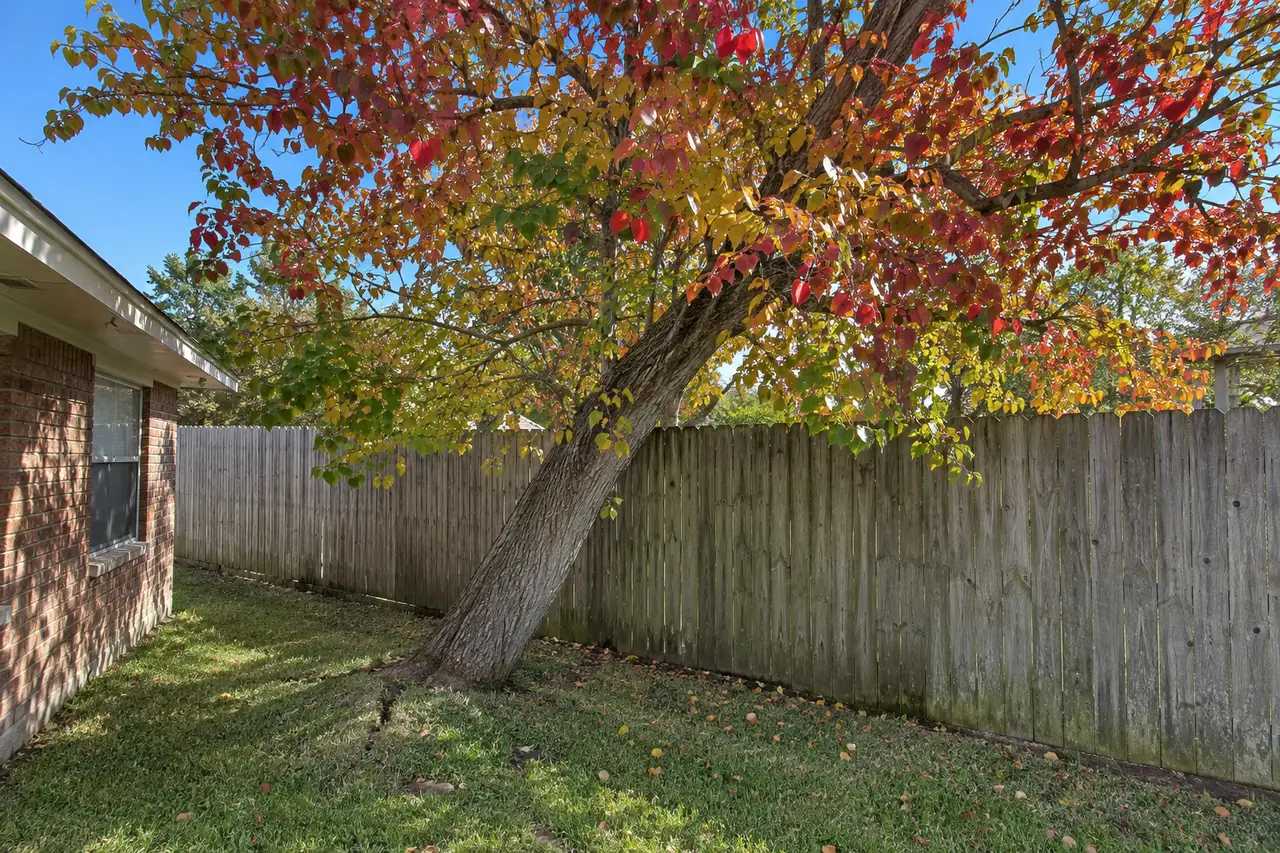
Local codes describe the dangerous kind in plain words. Alvin's tree article excepts removal of "severely leaning trees or trees with a seriously damaged root system which pose a reasonable threat of falling," and its 2025 power-line rule calls a tree a potential threat "if it is leaning, structurally unsound, or otherwise likely to fall onto the public power lines" (checked Nov 14, 2026).
When you send a request about a leaning tree, describe what you see:
- which way it leans, and what it would hit: the house, the fence, the street, a line,
- whether the lean is new, for example after a storm or a long soaking rain,
- whether the ground at the base has cracked or lifted on one side,
- whether the tree is dead, partly dead or in leaf.
Photos from two directions help the contractor judge it before the visit.
Standing water around the roots after heavy rain
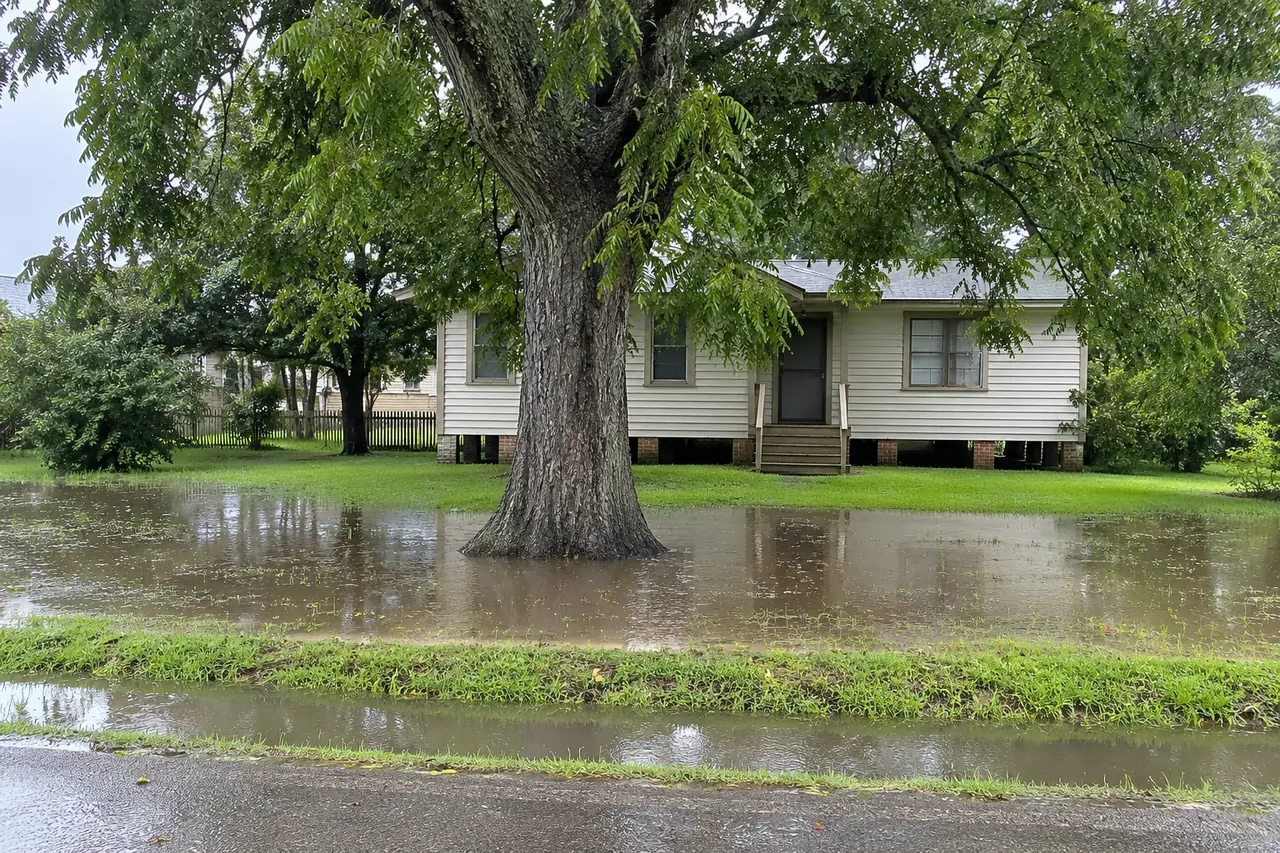
The Florida research names the soil conditions that matter: trees in shallow soils are more likely to blow over than trees rooted more deeply, and good soil depth, a deep water table and uncompacted soil help a tree stand up to wind (checked Nov 14, 2026). Heavy rain is part of life here. During Beryl in July 2024, a gauge 2.3 miles northwest of Lake Jackson recorded 10.79 inches in 48 hours, and during Harvey in 2017 the Brazoria County Airport near Angleton recorded 18.49 inches. The county's 2018 hazard mitigation plan counts 1,356 repetitive flood loss properties and 376 severe repetitive loss properties in Brazoria County.
A big tree standing in water for days isn't automatically doomed, and no source here gives a rule for when it is. But a tree that starts to lean after the ground has been saturated is the case the UF finding describes, and it deserves a look soon.
Dying palms and the quarantine in Galveston County
Lethal bronzing is a palm disease that kills a palm within about a year of the first symptoms. Texas A&M AgriLife's October 2025 publication, hosted by the Texas Department of Agriculture, says it's present in Cameron, Hidalgo, Nueces and Willacy counties and parts of Kleberg County, and lists parts of neighboring Galveston County as infested and under quarantine (checked Nov 14, 2026).
- Hosts include the Canary Island date palm, the one most often hit in Texas, plus the queen palm and Sabal palmetto.
- A planthopper, Haplaxius crudus, spreads it.
- Palms that test positive should be removed and destroyed, and reported to the Texas Department of Agriculture.
In December 2025, KEDT reported (news) that the disease was spreading on Galveston Island and that the Galveston County AgriLife horticulture agent urged removing positive palms "as soon as possible." It has not been confirmed in Brazoria County. If a palm in your yard is dying, say so in your request.
Laurel wilt, emerald ash borer and oak wilt
Three other tree threats in Texas haven't been reported in Brazoria County by the sources read for this site (checked Nov 14, 2026):
- Laurel wilt hosts include redbay, avocado and sassafras, along with swampbay, camphor and northern spicebush. The Texas A&M Forest Service's 2025 report counts 24 infected Texas counties and doesn't name Brazoria. Host firewood, trimmings or mulch "should not be moved out of counties with records of laurel wilt."
- Emerald ash borer had new confirmations in 2025 in Jack, Navarro, Rockwall, Somervell and Bell counties. The report doesn't mention the Gulf Coast.
- Oak wilt "continues to occur in 76 documented counties in Texas." Brazoria isn't named.
Removing a dead or leaning tree: what the rules allow
- Texas: §212.905(h) bars a city from prohibiting removal of, or charging a mitigation fee for, a tree that "is diseased or dead" or "poses an imminent or immediate threat to persons or property."
- Angleton: Sec. 23-60 excepts "Damaged or diseased trees that are beyond the point of recovery, in danger of falling, or endangering public health, welfare, property, or safety," and homestead owners are excepted anyway.
- Alvin: where the tree article applies, a permit for a "diseased, severely damaged, or dead" tree is issued "without cost or conditions" (Sec. 15-110(b)). Sec. 12-11 can require an owner to remove a dead or diseased tree threatening the public power lines.
- Lake Jackson: on platted residential lots the permit rule doesn't apply; elsewhere, call (979) 415-2430 (checked Nov 14, 2026).
If the tree is near a line, keep six feet back and call TNMP at 888-866-7456 or CenterPoint at 713-207-2222 (checked Nov 14, 2026). Then send a request, and one independent contractor serving Angleton receives it. See also the tree removal page and the full tree rules page.
Sources: Texas Local Government Code Ch. 212, AgriLife hypoxylon fact sheet, UF/IFAS "Wind and Trees", Lake Jackson tree list, Alvin Ch. 15, Art. IX, Alvin Sec. 12-11, NWS Beryl page, NHC Harvey report, Brazoria County Hazard Mitigation Plan, AgriLife lethal bronzing, KEDT (news, Dec 2025), Texas A&M Forest Service laurel wilt, 2025 Forest Health Highlights in Texas, Angleton Sec. 23-60, TNMP. All checked Nov 14, 2026.