
At a glance
- Stay six feet or more from any line a tree is on. TNMP's number is 888-866-7456; the county's 24-hour emergency hotline is 979-864-1064 (checked Nov 14, 2026).
- Photograph everything before it's cut, and keep every receipt.
- TWIA policies cover wind and hail only, not flood or storm surge. TDI's timeline gives one year to file.
- Texas law lets you cancel many door-to-door deals by midnight of the third business day.
What did Beryl do to trees in Brazoria County?
Beryl made landfall near Matagorda at about 4 a.m. on July 8, 2024, as a Category 1 hurricane, and the hurricane warning covered Brazoria County. The weather service's summary for the county reads: "Significant impacts were seen across the county with widespread tree damage." Fallen trees closed roads and damaged buildings in the City of Brazoria, homes were damaged in Freeport and Surfside Beach, and the weather service estimated "200,000 to 300,000 cubic yards of vegetative debris" in the City of Lake Jackson alone (all checked Nov 14, 2026).
| Station | Peak gust |
|---|---|
| SH 36 at the Brazos River | 97 mph |
| San Bernard National Wildlife Refuge | 91 mph |
| 1 mile SSW of Surfside Beach (maritime station) | 87 mph |
| Brazoria County Airport, near Angleton | 85 mph |
| Brazoria National Wildlife Refuge | 79 mph |
| Freeport | 64 mph |
Rain soaked the ground too. Over 48 hours, a gauge 2.3 miles northwest of Lake Jackson caught 10.79 inches and one near Brookside Village caught 11.76 inches. Across the U.S., the National Hurricane Center put Beryl's property damage at $7.2 billion, using NOAA's figure. The weather service's county summary lists no deaths in Brazoria County. FEMA declared the disaster, DR-4798, on July 9, 2024, and it includes Brazoria County.
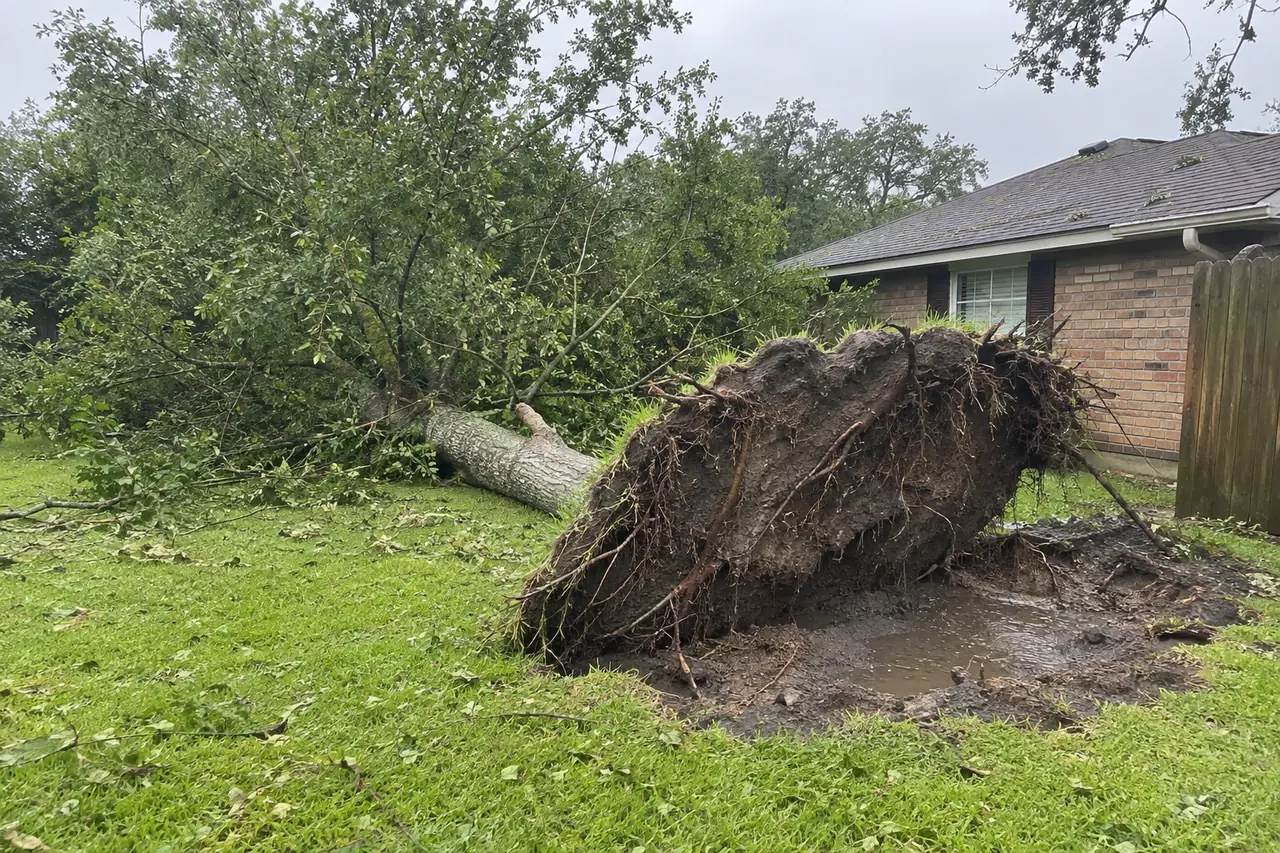
Harvey, Ike, Alicia and the rest of the county's storm record
FEMA's records show Brazoria County in 34 federal declarations since 1973: 24 major disasters and 10 emergencies (checked Nov 14, 2026). Those include Hurricanes Alicia, Rita, Ike, Harvey and Beryl. The ones that mattered most for trees:
| Storm | What the federal record says about Brazoria County |
|---|---|
| Delia, 1973 | Made landfall near Freeport with maximum winds of 69 mph |
| Alicia, Aug 1983 (DR-689) | Hurricane-force winds on "a 60 mile section of the coast, extending northeastward from Freeport"; lowest land pressure, 28.55 inches, at the Alvin weather service office |
| Ike, Sept 2008 (DR-1791) | Storm tide of "6 to 9 feet in Brazoria county" |
| Harvey, Aug–Sept 2017 (DR-4332) | Record levels on the Brazos and San Bernard Rivers; "Over 9,000 homes experienced flood damage"; 18.49 inches of rain at the Brazoria County Airport; five EF0 tornadoes on Aug 25, 2017, including one near Perry Landing on SH 36 with "numerous trees snapped or downed" |
| Nicholas, Sept 2021 | A 74-knot gust (about 85 mph) at Freeport Harbor; 10.19 inches of rain 2 miles northwest of Freeport |
| Beryl, July 2024 (DR-4798) | 85 mph at the county airport, 97 mph near SH-36 at the Brazos River, widespread tree damage |
| EF2 tornado, Dec 28, 2024 | Tracked 8.78 miles from near Liverpool into Hillcrest with peak winds of 125 mph; 1 death and 5 injuries in the weather service's preliminary survey; no FEMA declaration followed |
The county's 2018 hazard mitigation plan states that "Windstorms are identified by the State of Texas as a common hazard affecting the region" (checked Nov 14, 2026).
What to do in the first hours after a tree comes down
- Get people clear. If the tree came through the roof, get everyone out of that part of the house.
- Treat every wire as live. Texas law bars a person, or a tool in their hands, from coming less than six feet from a high-voltage overhead line until it's made safe (Health and Safety Code §752.004). TNMP takes outage and tree calls at 888-866-7456; CenterPoint's numbers are 713-207-2222 and 1-800-332-7143 (checked Nov 14, 2026).
- Call for help if it's an emergency. Brazoria County's Office of Emergency Management lists a 24-hour hotline, 979-864-1064, in its 2025 disaster guide (checked Nov 14, 2026).
- Photograph before anything is moved. Shoot the tree, where it landed, the roof, the fence and the root plate, from several angles.
- Call your insurer or TWIA and ask what they need before the tree is cut. Keep receipts for anything you pay to make the house safe.
- Then line up the cutting. Send a request describing what's down, where it landed and whether a line is involved.
Will homeowner insurance or TWIA cover the tree?
The Texas Department of Insurance answers the common questions in a January 2026 post (checked Nov 14, 2026):
- "Many policies pay for damages from falling objects, like trees."
- "Trees and limbs falling in your yard usually aren't covered."
- "Many policies provide some coverage to remove trees or limbs that fell due to storm damage." TDI gives no dollar limit.
- Your neighbor's tree on your house: "Probably not, unless your neighbor was at fault." An older TDI column adds that acts of nature aren't your neighbor's responsibility, and that "Your homeowner policy should cover materials and labor used to make repairs."
- A tree on your car falls under comprehensive coverage.
Brazoria County is one of the 14 "first-tier" coastal counties where the Texas Windstorm Insurance Association writes wind and hail coverage (TDI, Oct 2026). TDI's guide for TWIA policyholders says "TWIA policies only cover wind and hail damage"; flood and storm surge go through the National Flood Insurance Program. It lists removing "Trees that caused damage to structure" as a temporary repair, and its timeline gives "1 year" to file a claim with documents, 60 days for TWIA's review unless extended, and 545 days to send proof of replacement-cost repairs. TDI's help line is 1-800-252-3439 (all checked Nov 14, 2026).
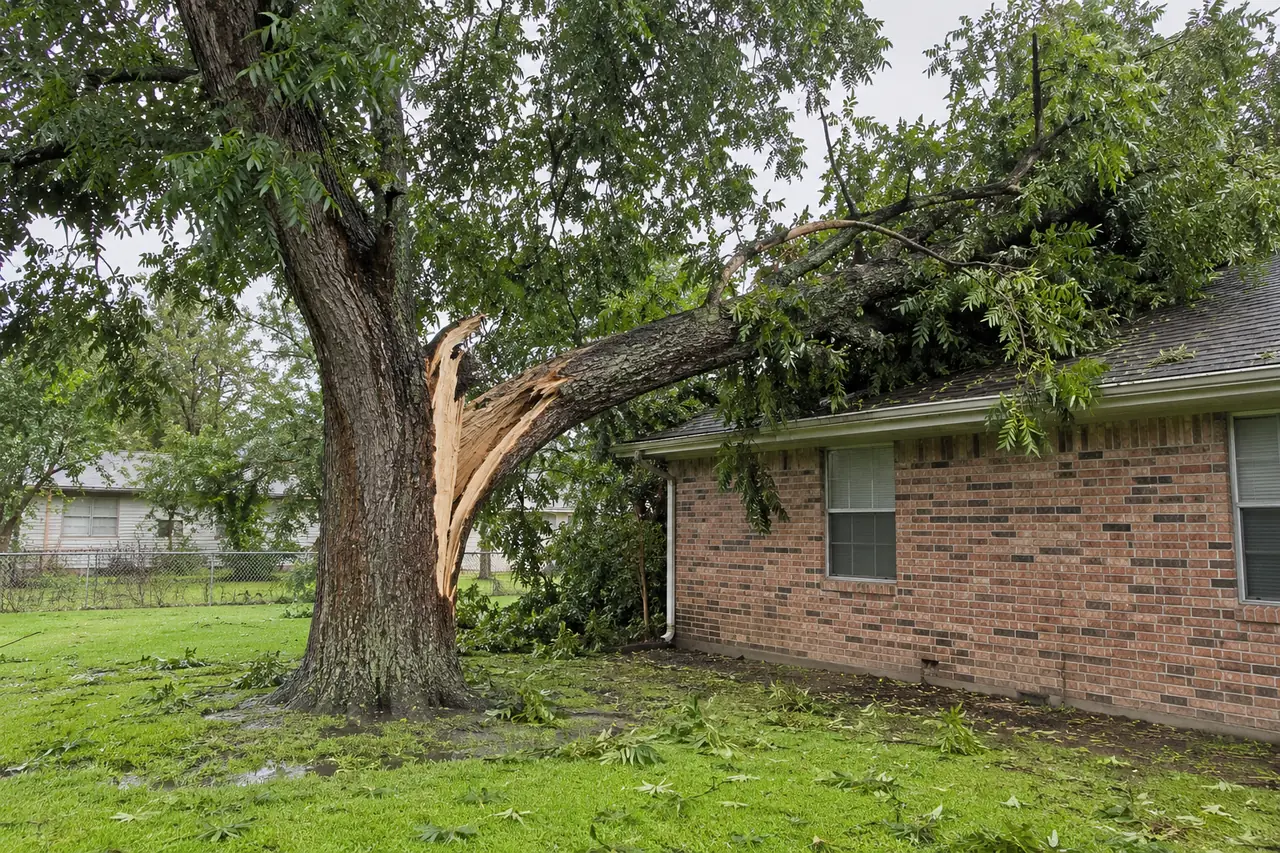
Crews knocking after the storm: gouging and the 3-day rule
If someone knocks on your door offering tree work after a storm, two Texas laws and one federal rule are worth knowing before you sign anything (all checked Nov 14, 2026):
- Price gouging. The Texas Attorney General says the Deceptive Trade Practices Act rule applies when a business takes advantage of "a disaster declared by the Governor under Chapter 418, Government Code, or the President" to sell necessities, including "building materials, construction tools," at an exorbitant or excessive price. It also says "high prices alone do not mean that price gouging has taken place." Complaints go through the AG's consumer complaint process.
- Texas's 3-day cancel law. Under Business and Commerce Code §601.051, a consumer may cancel a consumer transaction until midnight on the third business day after the agreement is signed. It applies when a merchant solicits the sale somewhere other than its place of business and the price "exceeds $25." The chapter shows no emergency exception.
- The FTC's Cooling-Off Rule. It gives "three days to cancel certain sales made at your home," but it excludes sales "needed to meet an emergency" and visits you asked for to repair or maintain property.
The hiring guide lists what to put in writing, and the cost page shows what the guides list for storm and emergency rates.
Which trees tend to come down in these storms?
University of Florida hurricane studies put pecan, water oak, laurel oak and Chinese tallow in their lowest wind-resistance group, and live oak in the highest. The same research says trees in shallow soils are more likely to blow over than trees rooted more deeply, and good soil depth, a deep water table and uncompacted soil help a tree stand up to wind (Florida data; checked Nov 14, 2026). Oaks weakened by hypoxylon canker are another risk; Texas A&M AgriLife says the disease can quickly colonize stressed trees, with stressors such as heat, drought, ice storms, hail, lightning and flooding. The dead and leaning trees page and the trimming page cover what to do before the next one. Wood and limbs from storm cleanup are covered on the storm debris page, and city rules on the tree rules page.
Sources: NHC Beryl report, NWS Houston/Galveston Beryl page, NWS Beryl impact narratives, OpenFEMA declarations for Brazoria County, NHC Harvey report, NWS Storm Data Aug 2017, NWS Storm Data Sept 2008, NHC Nicholas report, NWS 1970s hurricanes, NWS 1980s hurricanes, NWS Dec 2024 tornado survey, Brazoria County Hazard Mitigation Plan, 2025 county disaster guide, TDI fallen trees, TDI column, TDI TWIA overview, TDI TWIA guide, Texas Attorney General, Business and Commerce Code Ch. 601, FTC Cooling-Off Rule, UF/IFAS, AgriLife hypoxylon, TNMP. All checked Nov 14, 2026.